
Storyteller Adventures
Storytelling is one of our most fundamental communication methods. Who doesn’t love hearing a good story? The fact is, we spend much of our daily lives hearing and telling stories! It’s our way of sharing information and living vicariously through the experiences of others.
During our first half-century, we have been fortunate enough to have some pretty incredible experiences and we fancy sharing our tales. We’ve called this blog, “Storyteller Adventures,” because we wanted to share some of our incidents of travel as well as to document our journey of how Vista Tranquila Publishers came into existence and how it continues. So, what does our blog include and what can you expect to find? For sure, we’ll touch on topics relevant to bilingual life, our travels around the world, the exotic foods we try, and the intriguing people we encounter. We have astonishing adventures every day though, even when we don’t go anywhere. We’ll share our mundane observations and some truly unique encounters.
Vista Tranquila Publishers is our creation but, it’s so much more than a book publishing company. We seek to tell stories that will inspire interest, promote cross-cultural understanding, and be entertaining at the same time. Our basic premise for our business is in favor of creating shared experiences and opposed to the collection of garage sale fodder. We want to make our books and our products come alive. Once you become a part of the story, the books and the handicrafts we sell become part of our shared encounter, a type of trophy you story in your memory. Everything we post on our website will tell a story. We hope you like what we’re doing, and we look forward to reading your comments!

Day at the zoo






Decoration Day

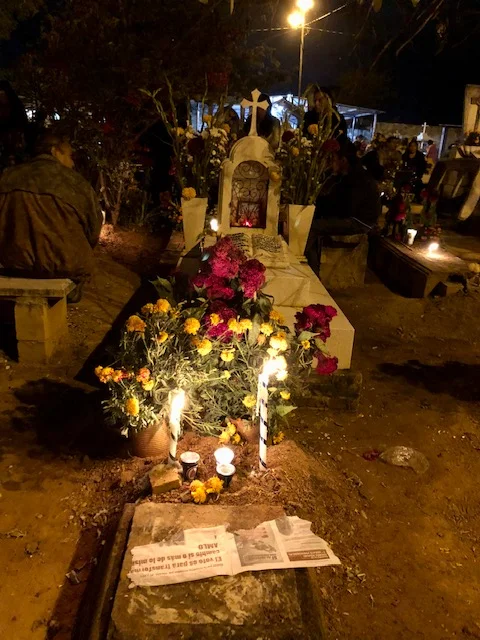
Day of the Dead, Oaxaca, Mexico
Deep in the Smoky mountains of North Carolina, there is a tradition called a '“Decoration” at a family cemetery nearly every Sunday in August and September. Mid- September is the Mathis decoration. It is often difficult to keep up with all of the branches of the family trees, but we always remember the Mathis Decoration.
In my childhood mind, this annual tradition of remembering our relatives who had passed away evoked memories of wandering through my mother’s garden cutting dahlias and other flowers, long-winded preachers, and country gospel singers. It is the time after the decoration that stands out the most. I vividly recall running through open fields chasing cousins, playing tag, eating casseroles from aunts who arose early to prepare special dishes, and trying to get apples and stubborn chinquapins from trees.
It’s been many years since I was in the US for the Mathis Decoration. The constant adventure of living abroad is tempered with a longing for home, familiarity, and family traditions. As an adult, I am now drawn to the memories of my daddy walking through the silent cemetery with my boys pointing out five generations of ancestors. Having lived in five countries over the last 25 years, I need that reminder of my southern Appalachian roots. It helps me to feel grounded.
When Wayne and I visited the general cemetery in Oaxaca, Mexico the evening of November 2, 2018 (Day of the Dead), there was something familiar to me about this unique cultural tradition. The dahlias were replaced with marigolds and candles, but the scene was similar. Children played with their friends, people sang along with a guitarist, and traditional family foods were shared. As we intently listened to a man, sitting on the edge of a tomb, recount stories and share memories of his recently-departed father, I felt less like a tourist who had invaded a private family gathering.
Mexico’s Day of the Dead celebration has become so commercialized that it is now part of American popular culture. Mass-produced sugar candy skulls and versions of José Guadalupe Posada’s Catrina can be found in a variety of stores throughout the US. I am left wondering if the sacred is slowly being replaced with the profane and will our mountain traditions of decorations endure beyond my generation.
Désirée Iturbide is a Guatemalan artist, illustrator, and art instructor. Creating art has been her passion since childhood. She especially liked drawing sketches of people and animals. As an adult, she worked as a graphic artist at the University of Zurich in Switzerland before returning to reside in Antigua, Guatemala, where she teaches watercolor workshops. Painting watercolor animals has become her specialty. She has illustrated five children’s books which feature watercolor animals.
Désirée Iturbide es una artista, ilustradora y profesora de arte guatemalteca. Desde niña le apasiona crear arte. Le gustaba especialmente dibujar retratos de personas y animales. De adulta, trabajó como artista gráfica en la Universidad de Zúrich, en Suiza, antes de regresar a Antigua, Guatemala, donde imparte talleres de acuarela. Pintar animales con acuarelas se ha convertido en su especialidad. Ha ilustrado cinco libros infantiles en los que aparecen animales pintados con acuarelas.